Fire Emblem: The Sacred Stones Review

MoreNiche LTD
It offers a lengthy, rewarding, thought-provoking experience that truly makes you feel as though the decisions you make, waging one exciting battle after the next, carry serious consequences.


Another epic, memorable adventure awaits in Fire Emblem: The Sacred Stones, the follow-up to 2003's similarly excellent strategy RPG, Fire Emblem. The previous game was actually the seventh in a series that had long since established itself in Japan, and at last made it to these shores. That makes The Sacred Stones the eighth Fire Emblem title, though it features an original, completely self-contained story and is equally well suited to new players as well as returning fans. Those fortunate to have played previous Fire Emblem games will find a comfortably familiar experience in The Sacred Stones, which features its own huge cast of unique characters and some noteworthy twists to the formula. However, most of the play mechanics, animations, and sound effects are the same as before, and therefore maybe not quite as impressive as they used to be. The game itself is outstanding overall, though, for all the reasons its predecessor remains one of the best Game Boy Advance games available--it, too, offers a lengthy, rewarding, thought-provoking experience that truly makes you feel as though the decisions you make, waging one exciting battle after the next, carry serious consequences.

Fire Emblem: The Sacred Stones consists of a series of strategic turn-based battles that are tied together by an elaborate, carefully crafted story featuring dozens of different characters...characters who live and die by your actions. The story touches on many of the same themes as the previous Fire Emblem game, but it's otherwise completely different, right down to the new setting of the land of Magvel. Central to the tale is a new pair of protagonists, the chivalrous royal siblings Ephraim and Eirika. When the kingdom of Grado suddenly and ruthlessly lays siege on its former allies in the kingdom of Renais, Ephraim and Eirika emerge as some of the sole survivors. Forced to go their separate ways, the two of them embark on a quest to muster an army and discover the source of Grado's treachery. You'll get to experience the story from both characters' perspectives, and parts of it even branch off, giving you a different angle on the storyline depending on whose journey you choose to follow.
Much like the previous Fire Emblem, this is a well-written, surprisingly sophisticated narrative featuring plenty of endearing heroes and villains, and no shortage of provocative, morally complex situations. The content isn't so severe that it isn't suitable for younger players, but the point is, Fire Emblem takes itself and audience seriously, though it's not without its occasional moments of comic relief, either. The storyline mostly just unfolds through lightly animated character portraits and accompanying onscreen text, yet this seemingly simple technique works surprisingly well to get the point across. The story is noninteractive and at times quite wordy, so you could skip right past it if and when you really want to. But, much like the previous game, the entertaining turn-based combat and the rich story of The Sacred Stones combine to form something much greater than the sum of these two parts.
The turn-based battles that form the basis of the gameplay in Fire Emblem have more in common with strategy games like Advance Wars than with other strategy RPGs like Final Fantasy Tactics Advance. In any given battle, you'll control a limited number of units--usually about a dozen--as you attempt to solve your mission's objective. That objective generally involves strategically battling against superior numbers of enemy forces. During your turn, you get to move all your units in any order, and if you wish to make them attack their foes, you're given an estimate of the results of that exchange before having to commit to the fight. When one unit attacks another, the game cuts to a little animated sequence showing the combatants exchange blows. If one unit runs out of health points, it's gone and out of the fight, and can usually be presumed dead. Don't think outsmarting your foes will be easy--the artificial intelligence in Fire Emblem is quite good, so you can look forward to your enemies exploiting any weaknesses in your defenses, such as by focusing their attack on your weakest forces. To make things really interesting, the game features tons of different character classes, each with their own distinct specialties. You've got knights, archers, cavaliers, priests, thieves, fighters, mercenaries, shamans, and many more to work with, including some exotic classes like pegasus knights and wyvern lords.

Fans of Fire Emblem should immediately recognize almost all of these, though a number of new high-level classes and enemy units have been added since the last game. As in the previous title, you must actively use your different characters in battle to make them earn experience points, and as they increase in levels, they noticeably begin to grow more powerful. Later, you'll also be able to upgrade them to a more prestigious character class that's much more effective. Actually, one of the significant changes in The Sacred Stones is that it gives you a choice when you upgrade most of your characters. In the previous Fire Emblem, your cavaliers could become paladins. Here, they can become paladins or great knights, the latter of which is one of the game's new classes.

Labels:

Posted by wishmaster, Monday, May 23, 2011 2:50 AM | 0 comments |

Dynasty Warriors Advance

MoreNiche LTD
Dynasty Warriors, Koei's action-strategy franchise, has gained a loyal following since its first appearance on the PlayStation back in 1997--which is pretty impressive considering that the subject matter deals with historical events in Chinese history. Five games and multiple consoles later, the series has finally come to the Game Boy Advance in the form of Dynasty Warriors Advance. Like its console predecessors, the GBA game strikes a balance between the action and strategy genres, and, at the same time, immerses players in "what-if" storylines concerning famous Chinese generals. Unfortunately, this pint-sized coup d'etat has been scaled back considerably from its console counterparts, to the point that very little of what made the console games enjoyable survived the cutting-room floor.

Watch Chinese history come to life and guide famous generals to victory.

Dynasty Warriors Advance is set during the Three Kingdoms period in Chinese history, which lasted roughly from AD 184 until AD 280. The Han dynasty ended, leaving three individual kingdoms of Wu, Wei, and Shu to spend the next century fighting for control of China. Many famous generals, such as Cao Cao, Cao Ren, Liu Bei, and Lu Xun, made their mark over the years by claiming victories in battles that literally shifted the balance to one side's favor. In Dynasty Warriors Advance, you can pick one of 13 famous generals and lead their troops through the entire era, possibly altering China's history in the process.

Once you choose a general, you'll find yourself in the first battle--Hu Lao Gate--staring at a map populated with castles, supply depots, and character icons. Gameplay is split into two phases: a strategy phase and an action phase. Neither is very complicated. The strategy phase works just like a board game. There are red and blue character icons situated on the map. The red ones represent your allies, and the blue ones are the enemies. You can move your own general one space per turn, while the CPU takes command of all of the other icons, both ally and enemy. When you make contact with an enemy, the action phase is initiated. This is where the magic happens. Your lone general is thrust onto a battlefield and you have to eliminate groups of enemies in real time by mashing the attack buttons. You can run around, dash, activate booster abilities, and perform different attack combos by keying in various combinations of the A and B buttons.

Even though the premise and gameplay sound esoteric and highfalutin, the console Dynasty Warriors games have no problem making the whole concept seem approachable and interesting. And that's because battles in the console versions resemble the kinds of thousand-man skirmishes you'd see in movies like Braveheart or Troy. Often, dozens, if not hundreds, of soldiers are displayed all at once. This sense of scope and scale is electrifying, especially considering how you can wander the environment and pick fights with lone captains or entire clusters of swordsmen. The GBA game, by contrast, can only display seven characters onscreen at any given time. As such, battles on the handheld lack the scope that battles on the console have.

And that's really the problem with Dynasty Warriors Advance--so many cutbacks were made to cram it onto the GBA that it's missing most of what made the console versions so enjoyable. Let's say you enter a battle against 50 enemy soldiers. Since the game can only display seven characters at once (including your general), it means that enemies come out six at a time. Battles drag on longer as a result, and, worst of all, the GBA game is that much easier since crowd control is never a challenge. Meanwhile, the sprites themselves are small, bigheaded, and poorly animated. Watching Cao Cao wave his sword around chunkily like Samurai Tailor in a classic 1970s Saturday Night Live sketch is hardly awe-inspiring. Not only do the flat, top-down environments obviously lack the scale that the large 3D environments on the consoles have, but they're also pretty bland. Except for a random wave motion or torch flame effect here and there, there's nothing going on in these woods and villages. The same holds true for the audio. If not for rock music constantly playing in the background, all you'd ever hear are the same metal clashing and groaning sound samples over and over again.

Beyond the technical cutbacks, there are numerous gameplay cutbacks, too. The GBA game has fewer kinds of enemies than the console games do. In Dynasty Warriors Advance, you encounter the same three enemies constantly--swordsmen, spearmen, and archers. The absence of flame-throwing juggernauts and captains on horseback is a real downer. You also can't do things like hire bodyguards or specify which officers accompany you into battle, which were two of the console games' nicer features. At least the arsenal of weapons and boost powers are still mostly intact. Each general specializes in three weapon types and has a set of six different boost powers that can be used to enhance attributes such as strength, speed, and combo effectiveness. There are approximately 250 weapons to find throughout the game, which, along with the leveling that occurs for killing soldiers, can turn your rookie general into a one-man army in no time. None of this matters, though, because the enemy artificial intelligence has also been greatly diminished. Standard enemies rarely attack or block, and CPU-controlled captains are only slightly more difficult because of their increased health and damage output. Basically, the action sequences in Dynasty Warriors Advance have been reduced to pure button mashing.

Repetitive combat, dumb enemies, and ugly graphics...Dynasty Warriors Advance has problems.

If you don't mind that Koei designed Dynasty Warriors Advance as an outright button masher, you might just get your money's worth out of it. The three campaigns each have six individual stages, and each stage can last more than an hour with all of the map moves and battles involved. That's a good 20 hours of gameplay even if you only play through the three scenarios once. The game also includes a free mode, which lets you revisit past stages outside of the campaign mode, and a challenge mode, which offers endurance, time attack, and treasure hunt-style objectives.

Compared to the console Dynasty Warriors games, Dynasty Warriors Advance is a watered-down imitation. On its own, it's a fairly generic and very repetitive button masher. Suffice it to say, if you already own another version of the game, you're better off sticking with it.

By Frank Provo,

Download : here
size : 7.78 MB

Labels: , ,

Posted by wishmaster, Sunday, September 20, 2009 5:41 AM | 0 comments |

Avatar - The Legend of Aang

MoreNiche LTD


Download here
size :

If you like it, buy it

Labels: , ,

Posted by wishmaster, Wednesday, May 27, 2009 5:15 PM | 0 comments |

Fire Emblem - The Sacred Stones

MoreNiche LTD
The Good
  • Deep, satisfying blend of strategy and role-playing
  • Lavishly crafted character-driven epic storyline
  • Lengthy quest also invites lots of replay value
  • Well suited for players of all ages and skill levels.

The Bad

  • Gameplay hasn't changed much since the excellent 2003 Fire Emblem game
  • Lots of recycled graphics and sound.

Another epic, memorable adventure awaits in Fire Emblem: The Sacred Stones, the follow-up to 2003's similarly excellent strategy RPG, Fire Emblem. The previous game was actually the seventh in a series that had long since established itself in Japan, and at last made it to these shores. That makes The Sacred Stones the eighth Fire Emblem title, though it features an original, completely self-contained story and is equally well suited to new players as well as returning fans. Those fortunate to have played previous Fire Emblem games will find a comfortably familiar experience in The Sacred Stones, which features its own huge cast of unique characters and some noteworthy twists to the formula. However, most of the play mechanics, animations, and sound effects are the same as before, and therefore maybe not quite as impressive as they used to be. The game itself is outstanding overall, though, for all the reasons its predecessor remains one of the best Game Boy Advance games available--it, too, offers a lengthy, rewarding, thought-provoking experience that truly makes you feel as though the decisions you make, waging one exciting battle after the next, carry serious consequences.

Ephraim's candor makes him a likable hero straightaway. He's one of dozens of great characters in Fire Emblem: The Sacred Stones.

Fire Emblem: The Sacred Stones consists of a series of strategic turn-based battles that are tied together by an elaborate, carefully crafted story featuring dozens of different characters...characters who live and die by your actions. The story touches on many of the same themes as the previous Fire Emblem game, but it's otherwise completely different, right down to the new setting of the land of Magvel. Central to the tale is a new pair of protagonists, the chivalrous royal siblings Ephraim and Eirika. When the kingdom of Grado suddenly and ruthlessly lays siege on its former allies in the kingdom of Renais, Ephraim and Eirika emerge as some of the sole survivors. Forced to go their separate ways, the two of them embark on a quest to muster an army and discover the source of Grado's treachery. You'll get to experience the story from both characters' perspectives, and parts of it even branch off, giving you a different angle on the storyline depending on whose journey you choose to follow.

Much like the previous Fire Emblem, this is a well-written, surprisingly sophisticated narrative featuring plenty of endearing heroes and villains, and no shortage of provocative, morally complex situations. The content isn't so severe that it isn't suitable for younger players, but the point is, Fire Emblem takes itself and audience seriously, though it's not without its occasional moments of comic relief, either. The storyline mostly just unfolds through lightly animated character portraits and accompanying onscreen text, yet this seemingly simple technique works surprisingly well to get the point across. The story is noninteractive and at times quite wordy, so you could skip right past it if and when you really want to. But, much like the previous game, the entertaining turn-based combat and the rich story of The Sacred Stones combine to form something much greater than the sum of these two parts.

The turn-based battles that form the basis of the gameplay in Fire Emblem have more in common with strategy games like Advance Wars than with other strategy RPGs like Final Fantasy Tactics Advance. In any given battle, you'll control a limited number of units--usually about a dozen--as you attempt to solve your mission's objective. That objective generally involves strategically battling against superior numbers of enemy forces. During your turn, you get to move all your units in any order, and if you wish to make them attack their foes, you're given an estimate of the results of that exchange before having to commit to the fight. When one unit attacks another, the game cuts to a little animated sequence showing the combatants exchange blows. If one unit runs out of health points, it's gone and out of the fight, and can usually be presumed dead. Don't think outsmarting your foes will be easy--the artificial intelligence in Fire Emblem is quite good, so you can look forward to your enemies exploiting any weaknesses in your defenses, such as by focusing their attack on your weakest forces. To make things really interesting, the game features tons of different character classes, each with their own distinct specialties. You've got knights, archers, cavaliers, priests, thieves, fighters, mercenaries, shamans, and many more to work with, including some exotic classes like pegasus knights and wyvern lords.

The gameplay itself consists of a long sequence of tense, exciting turn-based battles.

Fans of Fire Emblem should immediately recognize almost all of these, though a number of new high-level classes and enemy units have been added since the last game. As in the previous title, you must actively use your different characters in battle to make them earn experience points, and as they increase in levels, they noticeably begin to grow more powerful. Later, you'll also be able to upgrade them to a more prestigious character class that's much more effective. Actually, one of the significant changes in The Sacred Stones is that it gives you a choice when you upgrade most of your characters. In the previous Fire Emblem, your cavaliers could become paladins. Here, they can become paladins or great knights, the latter of which is one of the game's new classes.


Download here
size :

If you like it, buy it

Labels: , ,

Posted by wishmaster, 5:06 PM | 0 comments |

Naruto: Ninja Council Trashman

MoreNiche LTD
Can the anime brawler live up to the GameCube glory of Clash of Ninja 2?

To team with the release of the Naruto: Clash of Ninja series on GameCube, publisher D3 has been simultaneously sending out handheld adventures to go with the franchise's console counterpart. When the first Clash of Ninja game hit stores, Naruto: Ninja Council was released for GBA. Now that Clash of Ninja 2 has made its way to the states, we're again seeing a simultaneous release with Naruto: Ninja Council 2.

Released over two years ago in Japan, Ninja Council 2 has now made its way to the states to compliment the rising popularity of the anime. Like the first Ninja Council game, the story follows the show's protagonist Naruto Uzamaki as he teams up with friends, fights evil, and pulls off insane super-attacks that can only be found in good ole "Japanime". Unlike the previous game, however, Ninja Council 2 has taken on a new developer, follows a different design, and makes some admittedly odd gameplay choices. For starters, the overall presentation of the game is much closer to the characters, allowing for Naruto and the bunch to take center stage on the screen, with the necessity of showing off the license as a top priority. In addition, the game has gone from being a mix of combat, platforming, and exploration to being primarily combat-based, and unfortunately the gameplay just isn't there.

In Naruto: Ninja Council 2, players have a chance to use not only Naruto himself, but also his friends Sasuke and Sakura as they attempt to pass the Chunin Exams at the Ninja Academy. Unfortunately, the evil Orochimaru has sprung a trap to catch the young ninjas, forcing Naruto and his friends to not only pass the exams, but also thwart Orochimaru's evil plans in the process. At any time in the game, players can switch between the three fighters with a tap of the L button, bringing in a fresh fighter with new super attacks, different combos, and varying attributes. Regardless of who you're controlling, the basic premise of the game is still the same; run to the right, kick the crap out of baddies, fight the boss, and repeat.

Unlike its predecessor, Ninja Council 2's level design is amazingly bland, usually banking off a single hook for each level. In the opening forest level, for example, there's very little vertical movement at all, as players merely run to the right, jump over fallen trees and stumps, and beat up on enemy thugs. The game tries to add flavor to the levels by including simple themes for each world (such as a cave level where fighters will have to battle on the backs of giant snakes), but the entire feel of the game is amazingly void and uninspired. In the previous Naruto GBA game players could run up walls, gain new spells to use, platform across tons of environmental hazards and find hidden areas. In Ninja Council 2, it simply feels like you're running from boss to boss.

Even the lack of inspired level design would be justified if the game's battle mechanic was stronger than the previous game. After all, the Clash of Ninja franchise exists purely on character combat, so a 2D title of the same nature could be a successful take on the franchise. Unfortunately, the gameplay feels very clunky, and doesn't have the balance necessary for an enjoyable fighting experience. The gameplay works on the most simplistic of levels, allowing for basic button-mashing, but when it comes to depth, Ninja Council 2 missed the mark. Player control is far too touchy, as even the simple act of turning around will take an additional tap when coming out of a run. Fighter collision is very uneven as well, having players making contact with punches that miss by 10-20 pixels away. It's hard to show off a strong fighting mechanic when players are taking damage from clear misses, and as we played through the game it became amazingly apparent that Naruto's looks were far more important than the game's feel. Sure there are a few awesome supers to pull off, sending enemies into a vortex of pain, but when general movement doesn't feel right, it just doesn't hold up. Sealing the deal, the game's aerial combat lacks a smooth feel as well, so not only is the combat difficult to work with on the ground, but also the air.

Despite the unintuitive controls, the game definitely has a strong style. Character animations are fluid and the overall look of the game is very flashy. Characters attack with a good deal of effects, and the amount of attention that went into each super is definitely apparent when watching the scripted attacks in motion. Even the audio includes a few snippets of English dialogue, and while the music isn't anything special, it's a solid all-around effort in the presentation category.

Closing Comments
Naruto Ninja Council 2 is a poster-child for the phrase “If it ain’t broke, don’t fix it.” The original game wasn’t amazing by any standards, but it was still a solid action-adventure game. Ninja Council 2 attempts to focus more on the fighting and less on the exploration, but fails to retain the tight gameplay of the original in the process, making for a game with far more detail and style, better character animations, but a weak overall feel. The level design is very sloppy, the collision detection is off, and the super attacks – while entertaining – can’t make up for the lack of overall melancholy combat execution. The addition of multiple characters was a great choice, and the gameplay can be fun at times on the most simplistic and mindless level, but even the most avid fans will find themselves frustrated at the poor combat and shallow environments in no time. The game offers a multiplayer mode for co-op and vs. battles, but Naruto fans would do better to enjoy the more solid execution of the original Ninja Council game for GBA, or invest in Clash of Ninja 2 for GameCube than play through this flawed, dated, and completely average feeling action game.

Download here

size

if you like it, buy it

Labels: , ,

Posted by wishmaster, Tuesday, May 19, 2009 1:57 AM | 0 comments |

Final Fantasy V Advance

MoreNiche LTD
If you grew up playing 16-bit games for the Super Nintendo Entertainment System, then you're probably familiar with Final Fantasy II and Final Fantasy III. These were some of the defining role-playing games of the early 1990s and featured surprisingly deep storylines and interesting characters, as well as plenty of tough battles and great presentations. At the time, though, it wasn't apparent that there were a bunch of Final Fantasy games that came in between these and the original for the 8-bit NES. The middle child of the 16-bit Final Fantasy era has now finally arrived on the Game Boy Advance, nearly 15 years after it was first released in Japan. Playing Final Fantasy V Advance will be a revelation to some fans of the series. After all, this is the game that introduced many great gameplay concepts and went on to be featured prominently in later, better-known games, such as Final Fantasy Tactics, Final Fantasy XI, and more. Sure enough, the game holds up well even by today's standards, offering up a lengthy and challenging quest. You'll also be able to sink your teeth into lots of interesting gameplay.

Final Fantasy V lets you freely switch between many character classes, or "jobs," which opens up the gameplay in some exciting ways.

This version of Final Fantasy V isn't an exact translation of the Super Famicom original because it's intended to be a faithful adaptation with some key enhancements. For example, it features a new English translation from the original Japanese; this localization is different from the one found in the version of Final Fantasy V included with 1999's Final Fantasy Anthology for the PlayStation. Most of the dialogue is nicely done and succeeds at giving the main characters of the story their distinct personalities. The script has a few too many unnecessary attempts at humorous pop-culture references, but for the most part, it's very good. The visuals look just as you'd expect from a 16-bit game. If you remember playing Final Fantasy II or III in their heyday, this game will look instantly familiar. While some of the graphics are pretty plain, there's a lot of personality in the main characters. Some of the monsters and other foes you'll face still look great. Final Fantasy V Advance also features an updated soundtrack that sounds very true to the style of the classic games in the series--a style that Final Fantasy has held onto even as the series' graphics rapidly evolved. What's more, this version of the game features some new content found later on in the adventure, most notably some new job types for your characters. A bestiary and a music player are a couple of other extras.

The Final Fantasy series is known for the quality of its storytelling, but this is an area in which Final Fantasy V Advance doesn't hold up remarkably well. You'll still be in for a number of surprises and some almost disarmingly emotional moments, though the premise is pretty simple. When the wind crystal suddenly shatters and causes the wind in the world to simply stop, Princess Lenna Tycoon sets off to discover exactly what happened. It's not long before she's joined in her quest by an adventurer named Bartz, an amnesia-stricken old man named Galuf, and a feisty pirate named Faris. This unlikely quartet is quick to unite as a team despite having so little in common. And together, they set off to try to prevent the world's other elemental crystals from shattering. Their journey will wind up spanning much more than just the world they know. They'll travel the land by land, sea, and air, from town to town and dungeon to dungeon, in what's a typically epic Final Fantasy adventure. The main characters don't seem all that likable at first, and aspects of the story that were probably inventive at the time now seem predictable or trite. However, this is still a more sophisticated tale than what can be found in most of today's games.

The game's audiovisual presentation isn't fancy by today's standards, but it still has plenty of charm.

The gameplay of Final Fantasy V Advance is the best part about it. It's so good that it compares favorably even to the recent chapters in the series. While the game is rife with the random encounters that have always been common to Japanese role-playing games, your ability to freely choose between a wide variety of job types for your characters really opens up the game and creates the potential for lots of interesting, unique combat tactics. Your characters will earn new job types during the course of the game. Thus, their ability to freely switch from, say, being a knight to being a monk is justified in the context of the story.

It's hard to say enough good things about the job system. For starters, it gives you the freedom to completely change your characters' strengths and weaknesses at any time. So if you get stuck trying to beat a particularly tough boss opponent, you can experiment with some completely different tactics. The job system also offers some really exciting variety by featuring just about every cool character archetype that the Final Fantasy series has ever seen. So you're not just stuck with basic classes, such as knights, mages, and thieves; you also get berserkers, mystic knights, ninja, samurai, rangers, dragoons, chemists, beastmasters, and more. Some of these job types seem noticeably less useful than others, though, partly because some are better suited to supporting roles while others are great at dishing out damage. But in the end, it's fantastic to have all of that variety. And one of the best parts is that each character has a unique look for each of the different job types. It's as if each character has this huge wardrobe of completely different outfits.

The job system is all the better because it essentially gives you two experience tracks to consider for each character. Your warriors all grow stronger from gaining experience after each victory, but they also earn ability points that are used to unlock new powers for their current job. Each job has its own unique abilities, some of which are valuable enough to offset inherent weaknesses in those jobs. However, what's really intriguing about this system is that you can mix and match different abilities with different job types. The result is an open-ended character development system that lets you form a diverse and powerful squad. You can have a monk who is capable of dealing tremendous bare-fisted damage or casting some of the most powerful black magic spells. You can also have a ninja whose speed not only makes her quick to dish out pain but also quick to heal or revive injured comrades. Or you might want to equip a summoner with a dragoon's spear so that he can attack without penalty from the rear ranks while conserving magic power for a devastating area-effect attack. Suffice it to say, there are a lot of exciting possibilities to explore.

If there's any downside to this system, it's that it gives you a lot to think about and manage. The game doesn't force you to stick with any particular job types, but you'll naturally want to explore them all before settling on what seems like an ideal combination. On top of all that, Final Fantasy V Advance can feel quite punishing because you can look forward to plenty of powerful opponents who can defeat your characters or even the entire party quickly. Thankfully, the combat system has a nice, fast feel to it because this game comes from an era before Final Fantasy slowed down the pace with lots of big, ostentatious special effects. If your party is suitably equipped, you can breeze through most random encounters in seconds.

Like any great role-playing game, Final Fantasy V Advance can keep you happily busy for many, many hours.

Final Fantasy V Advance includes a quick-save feature that lets you easily pick up and play the game in brief stretches. Playing a little at a time, however, might cause you to forget what it was you were supposed to be doing when you come back to the game. Otherwise, you can save your progress on the world map or in key points that are scattered about the dungeons. The game is fairly linear overall, but the world feels quite expansive. There are also a lot of secrets to explore and hidden items to discover off of the beaten path if you choose to invest the extra time and effort. Even though the presentation quality certainly isn't up to the level of newer Final Fantasy games, the depth of play is definitely there.

There's no good explanation for why Final Fantasy V was never released on these shores in the first place because it surely would have been as well received as the other 16-bit games in the series. Be that as it may, consider this a clear-cut case of "better late than never." The sign of a classic is when you can approach it years and years after it originally came out and enjoy it because it still plays great--not for nostalgia's sake. Final Fantasy V Advance is such a game. In spite of its humble stature as a Game Boy Advance rerelease of an old game, those who like Japanese role-playing games shouldn't miss it.

Download here
size :

if you like it, buy it


Labels: , ,

Posted by wishmaster, Sunday, May 17, 2009 10:38 AM | 0 comments |

Back to Stone

MoreNiche LTD

As adventure games go, Back to Stone doesn't do much to bust out of the "fight monsters, fetch items" formula. The game's lone gimmick is that you play as a man who can transform monsters into stone blocks. Those stone blocks, in turn, can be pushed around and used as platforms or to activate floor switches. Basically, the developer has come up with an interesting way to enable the same block-pushing mechanic we've seen in countless similar games. However, while that's nice and all, it doesn't make the act of pushing blocks more enjoyable, and it sure doesn't change the fact that Back to Stone is a bland dungeon crawl with some serious shortcomings.


Story and gameplay fall into the usual stereotypical patterns. The setting is a postapocalyptic world in which magic has replaced science as the technology of record. Demons have taken over and are performing horrible experiments on the populace. Your character wakes up in a prison cell one day and soon discovers that he's been transformed into a half-human, half-demon hybrid with the ability to turn living things into stone. The story takes off from there, as you decide to use your newfound power to take revenge on the demons and overthrow them. What follows is a series of 21 missions set in isometric-view dungeons that mainly involve punching various monsters, jumping between platforms, and pushing blocks around.

Unlike other adventure games that gradually give you new weapons and abilities to use, Back to Stone doles out its entire limited arsenal within the first couple of missions. Your character has a single punch attack, which turns most enemies into stone. You can also unleash a powerful energy blast, although you don't often get the chance to do so because you need to collect crystals to recharge it. Your character turns into a full-on demon when he's low on health, but that's barely reflected in the gameplay. When you're a demon, your attacks become stronger and certain non-player characters won't talk to you. Each dungeon has its own diverse menagerie of monsters. While they all look disturbing, only a few actually make an effort to chase you or assail you with magical attacks. Most just crawl around within a small territory and dish out damage if you somehow run into them. The larger "boss" monsters located at the end of certain dungeons do have intricate attack patterns, however. Those battles are an exciting change of pace from the otherwise mundane act of turning tiny monsters into stones and then pushing those stones around to make the platforms or activate the switches that will get you through an area.

Being able to turn monsters into stone blocks is a cute gimmick, but it doesn't inject any new energy into the block-pushing mechanic that has been done to death in so many similar games through the years. Stones can be used to safely traverse electrified floors or change the orientation of rotating platforms, or placed into preordained spots to produce crystals or unlock doors. Some stones are unbreakable. Some explode and clear away any nearby monsters. Ramps and arrows in the environment let you launch stones over bottomless gaps. Back to Stone definitely delivers some clever puzzles involving the pushing of stone blocks. Regardless, pushing blocks around gets boring after a while. Instead of giving you a periodic break like other games would, Back to Stone will just keep taxing you with one block-focused puzzle after another. The game is a long one compared to other adventure games, taking roughly 10 hours to complete. Most of that time, though, is spent moving stone blocks around.

In terms of presentation, Back to Stone is inconsistent. Every good aspect seems to be tempered with a negative. For instance, while the music is haunting and intricate, there aren't many sound effects other than some punches and the demonic roar that happens when your character runs low on health. As for the visuals, the variety of enemies and environments is great, and the character animation is more fluid here than in a lot of other GBA games. Unfortunately, each enemy has only one or two different movements, and the graphics are heavily stretched. It's as if the game was initially being developed for a system with a smaller screen and then transitioned to the GBA midway through the development cycle.

There's some combat and platform-jumping, but the main focus of the game is on using stone blocks to solve puzzles.

The isometric view also causes problems at times. Since the environments are tilted to fake a three-dimensional sense of depth, it can be difficult to line up jumps and to position blocks properly. Too much of the game's trial and error is a result of the perspective, causing you to misjudge open air for solid ground. Thankfully, such mishaps usually aren't fatal. If you fall off a ledge, for instance, your character will reappear on solid ground with only a touch of health deducted. Or if you place a stone in the wrong spot, it'll eventually dissolve and you can go transform another monster into a useful statue. Password markers are scattered liberally throughout each dungeon, which is both good and bad. On the one hand, you can always take a break and return to your game whenever you need to. On the other hand, you have to stop and jot down a 10-character password every minute or so if you want to keep tabs on your progress.

It's nice to see that developers are still producing original games for the Game Boy Advance. Unfortunately, Back to Stone is a bland, sloppy adventure game that doesn't bring anything original to the formula apart from a novel twist on the same block pushing we've been doing for years.

Size ± 36 MB : Download here

If you like it, buy it

Labels: , ,

Posted by wishmaster, Thursday, May 14, 2009 4:41 AM | 0 comments |

Harry Potter and the Order of the Phoenix

MoreNiche LTD
Electronic Arts has produced two very similar renditions of Harry Potter and the Order of the Phoenix for the Nintendo DS and Game Boy Advance. The graphics in the DS game are more detailed, and the stylus acts just like a magic wand in that version, but the two games are otherwise virtually identical. Each is a collection of minigames and fetch quests woven into the story framework of the fifth Harry Potter film (and the book, to some extent). Regardless of which version you play, you'll get to control Harry, wander around a meticulous replica of the Hogwarts grounds, and cast spells alongside the other members of Dumbledore's Army. However, what you won't get from either version of the game is the same high level of tension and excitement that you got from the movie or the book. Showdowns that were epic in the movie are depicted as dull, turn-based duels or as static images, and the filler-style fetch quests only serve to stretch what should be a two-hour story into an eight-hour grind.

Download it here

If you like it, buy it

Labels: , ,

Posted by wishmaster, Friday, April 17, 2009 9:31 PM | 0 comments |

Summon Night 2

MoreNiche LTD


Summon Night: Swordcraft Story 2 is an RPG set in the strange world of Lyndbaum, a sacred land linked to four magical dimensions from which Summoners can call forth spirits called Guardian Beasts to do their bidding.
Its worth to try this RPG, very addictive

download : here
size : 10.86MB

if you like it, buy it

Labels:

Posted by wishmaster, Sunday, December 24, 2006 6:49 PM | 0 comments |

Marvel Ultimate Alliance

MoreNiche LTD


Marvel: Ultimate Alliance features a deep, rich gameplay experience by offering total team customization, where players create their own team name, icon and vehicle, as well as establish their team reputation as they play throughout the story.

Gamers also have the option to level up each character individually to their liking, or all team members at the same time to keep their heroes balanced. With the game’s new combat system, players battle against the world’s most notorious Marvel Super Villains in the air, underwater, and on the ground, using grappling, blocking and dodging moves, by charging up their Super Hero powers before unleashing them, and using environmental objects as one and two-handed weapons.

Download : here
size : 3.37MB

if you like it, buy it

Labels: ,

Posted by wishmaster, 6:37 PM | 0 comments |

One Piece

MoreNiche LTD


A game based on Japaneese manga "One Piece" are very addictive game
The game are run colorfull, every one should like it.

download : here
size : 2.44 MB

if you like it, buy it

Labels: ,

Posted by wishmaster, Wednesday, December 20, 2006 9:55 PM | 0 comments |

Kingdom Heart

MoreNiche LTD


A game publish by Square Enix creator of Final Fantasy Series, now available on Gameboy Advance after succes on Sony plastation Console.
The roms are quite hugh, but you'll satisfied by the detail graphics and story

download : here
size : 16 MB

if you like it, buy it

Labels: ,

Posted by wishmaster, 9:47 PM | 0 comments |

Mario & Luigi Superstar Saga

MoreNiche LTD


Mario & Luigi: Superstar Saga
features a unique battle system similar to Super Mario RPG's and Paper Mario's in which timed button presses are crucial to both increasing damage of party attacks and reducing the damage of enemy attacks. This system, however, is even more important in Superstar Saga, as well-timed button presses can not only increase damage done by your attacks, but also completely avoid or even counter enemy attacks as well.

Furthermore, Superstar Saga is unique as both Mario and Luigi are utilized to battle enemies, solve puzzles, and reach new areas. The brothers accomplish this with a mixture of jumping, using hand powers, and utilizing a variety of unorthodox partner techniques such as having Mario burn Luigi's pants to make both brothers run at very high speeds,but they can't do any thing but steer.


download : here
size : 6.65 MB

if you like it, buy it

Labels:

Posted by wishmaster, Sunday, December 17, 2006 12:04 AM | 0 comments |

Ant Bully

MoreNiche LTD


This simple adventure game should be just right for younger players and anyone that wants an inoffensive game based on their favorite movie.

Dowload : here
size : 3.19 Mb

if you like it, buy it

Labels:

Posted by wishmaster, Thursday, December 14, 2006 11:09 PM | 0 comments |

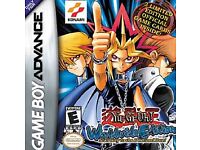
Yu Gi Oh - World Wide Edition

MoreNiche LTD

The most accurate re-creation of the Yu-Gi-Oh! Trading Card Game ever! Implementing updated rules from the official Trading Card Game and over 1000 cards, Yu-Gi-Oh! Worldwide Edition: Stairway to the Destined Duel is a must-have for every duelist. With support for English, French, Spanish, German, Japanese and Italian, duelists are no longer bound by the limitations of language. Win the championship and become the best duelist in the world!

Download : here
Size : 6.54 MB

if you like it, buy it

Labels:

Posted by wishmaster, 11:03 PM | 0 comments |